Menu
Selling Old Gold vs Broken Gold: Does It Affect the Value?
Introduction
Many people hesitate to sell gold because their jewellery is old, damaged, or broken. A common concern is whether broken gold items are worth less than intact jewellery.
The truth is simpler than most people expect. In Sri Lanka, the value of gold is not determined by its appearance, design, or condition—but by measurable factors. This guide explains the difference between selling old gold and broken gold, how valuation works, and what you should expect when selling gold in Colombo 💰.
What Is Considered Old Gold?
Old gold refers to jewellery or gold items that are no longer worn or used. These may include:
Outdated jewellery designs
Inherited gold items
Jewellery with faded finishes
Gold ornaments kept unused for years
Even if the design is no longer fashionable, old gold still holds full value based on purity and weight.
What Is Broken Gold?
Broken gold includes items that are physically damaged or incomplete, such as:
Broken chains or bangles
Single earrings
Bent rings
Loose gold pieces
Although broken gold may not be wearable, it does not lose its gold value.
Does Condition Affect Gold Value?
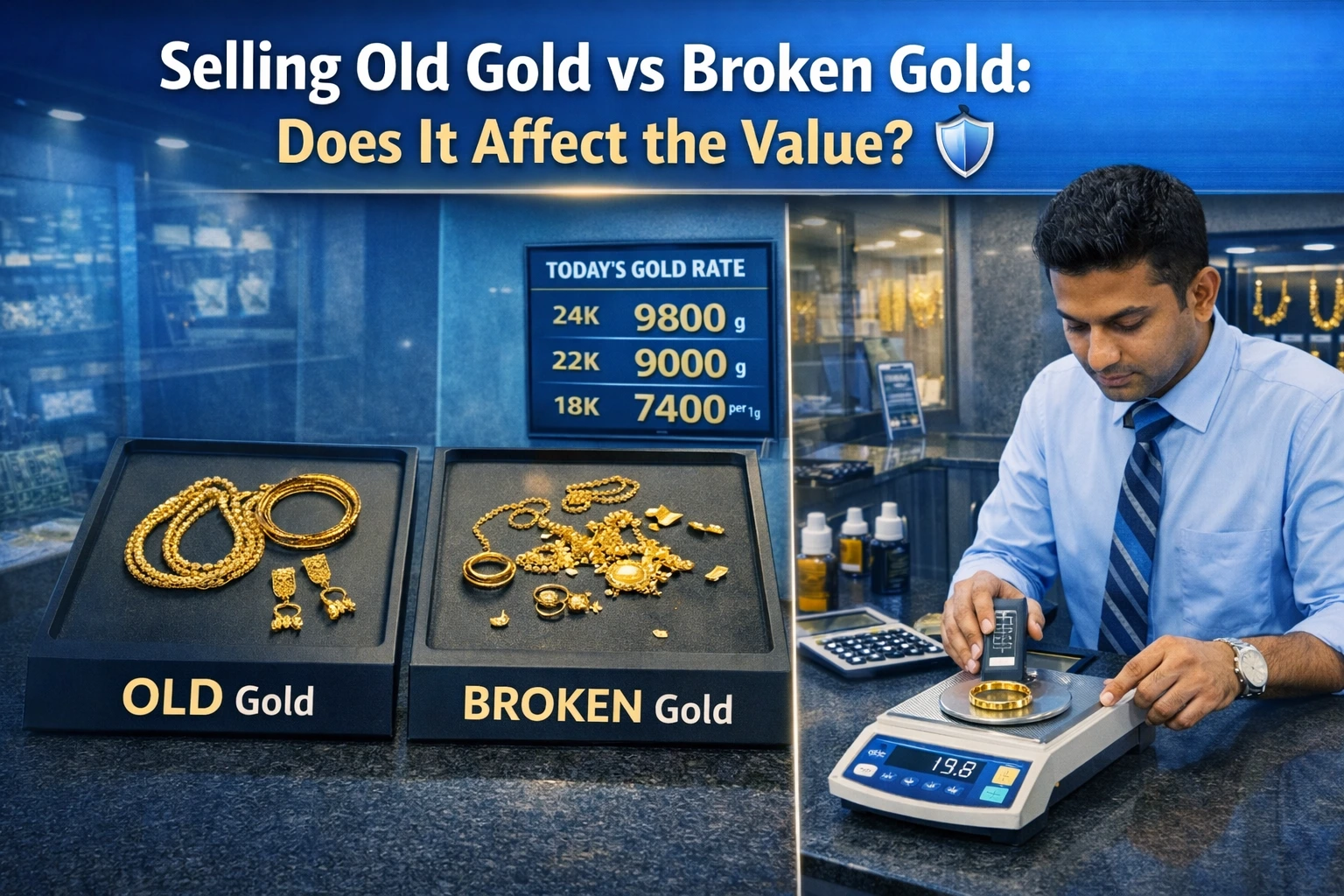
From a gold buyer’s perspective, condition does not affect value. Gold is a metal valued by:
Purity (karat)
Weight (grams)
Daily gold rate
Design, polish, brand, or wear-and-tear do not reduce the intrinsic value of gold.
This means broken gold and old gold are valued in the same way as new gold jewellery.
How Old and Broken Gold Are Valued ⚖️
Professional gold buyers follow the same valuation process for all gold items:
1. Purity Testing
Gold is tested to determine karat value (24K, 22K, 18K, etc.). Testing is done using safe, non-damaging methods.
2. Accurate Weighing
Gold is weighed using calibrated digital scales. Stones, clasps, and non-gold elements are excluded to ensure accuracy.
3. Applying the Live Gold Rate
The final value is calculated using the current Sri Lankan gold rate for the specific karat.
At We Buy Gold, this process is explained clearly so customers understand exactly how their gold is valued.
Common Myths About Broken Gold
There are several misconceptions about selling broken gold:
Broken gold is worth less than new jewellery
Gold buyers deduct value for damage
Single pieces cannot be sold
In reality, gold buyers focus only on metal value, not usability. Even a small broken piece still holds full gold value.
When Selling Jewellery Design Matters
Design matters only when selling jewellery as jewellery—such as to a retail buyer. When selling gold to a gold buyer, jewellery is valued as raw gold, not as a finished product.
Therefore:
Making charges
Brand value
Craftsmanship
do not affect the gold selling price.
Why Selling Old or Broken Gold Makes Sense 💡
Selling unused or broken gold can be a smart financial decision because:
It converts idle assets into instant cash
There are no repair or redesign costs
Payment is immediate
There are no future obligations
For many families, selling old or broken gold helps meet urgent needs or fund new opportunities.
Tips Before Selling Old or Broken Gold
Before visiting a gold buyer, consider the following:
Check the daily gold rate
Separate gold from non-gold parts if possible
Choose a transparent and trusted buyer
Ask questions and understand the valuation
Taking these steps ensures a smooth and fair experience.
Final Thoughts
Old or broken gold does not lose its value. As long as the gold is genuine, it is valued based on purity, weight, and the live gold rate—nothing more, nothing less.
If you are holding on to unused or damaged jewellery, selling it can be a practical and rewarding choice. The key is choosing a professional gold buyer who values your gold accurately and transparently.
Your gold, regardless of condition, represents real financial value—make sure it is treated that way.