
Menu
Gold Selling vs Pawning in Sri Lanka: Which Is the Better Option?
Introduction
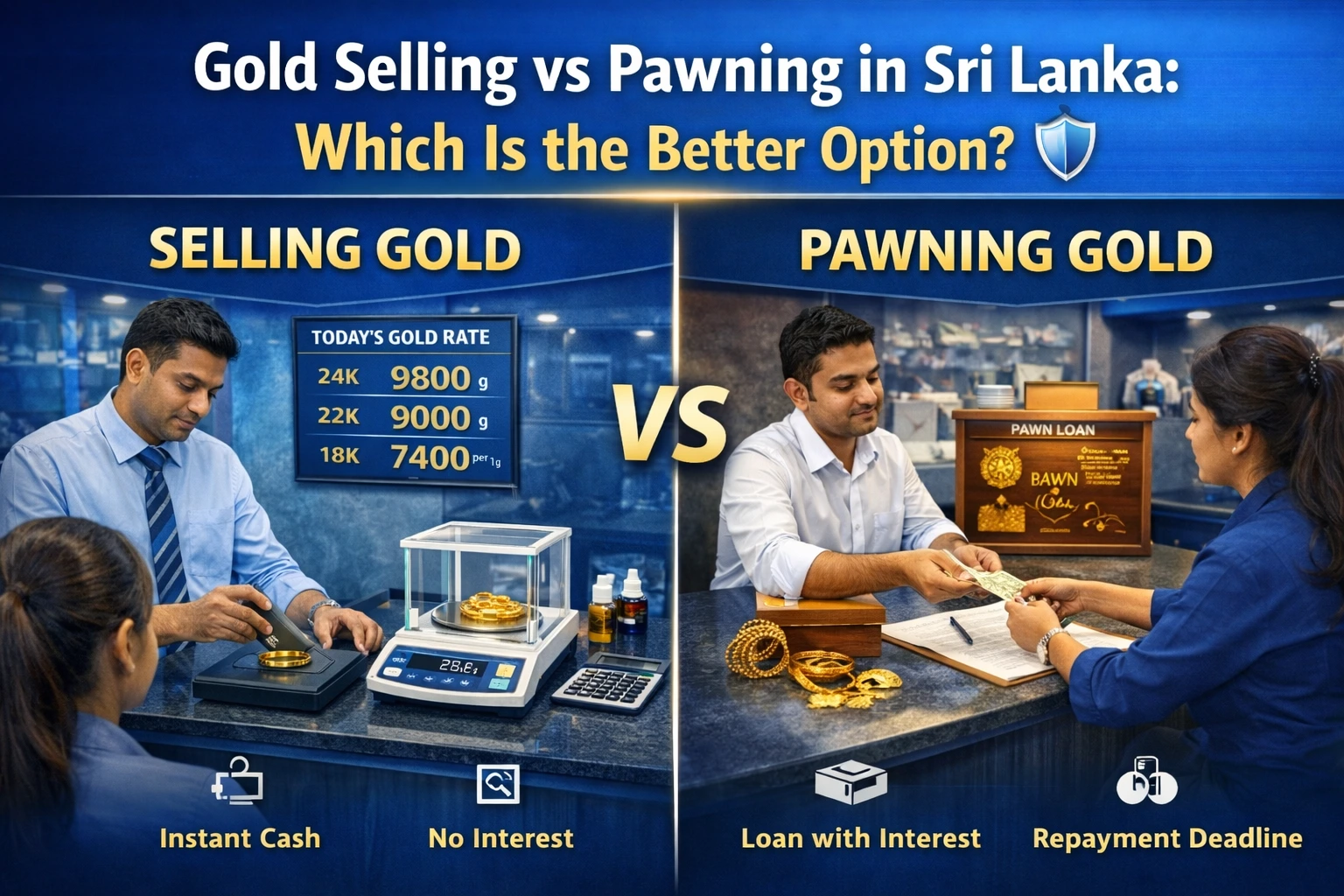
When facing a financial need, many Sri Lankans turn to gold as a reliable solution. Traditionally, pawning gold has been common, but in recent years, selling gold has become an increasingly popular alternative.
Understanding the difference between selling gold and pawning gold is essential before making a decision. Each option has its own benefits and limitations depending on your financial situation, repayment ability, and long-term plans. This guide compares both options clearly to help you choose what suits you best 💰.
What Does Selling Gold Mean?
Selling gold means transferring ownership of your gold to a gold buyer in exchange for its full market value.
Key features of selling gold:
-
You receive instant cash
-
No repayment or interest
-
No future obligations
-
Value based on purity, weight, and live gold rate
Once sold, the transaction is complete.
What Is Gold Pawning?
Gold pawning involves using gold as collateral to obtain a loan from a bank or pawning institution.
Key features of pawning gold:
-
You receive a loan, not full value
-
Interest is charged
-
Gold must be redeemed within a fixed period
-
Failure to repay may result in forfeiture
Pawning is suitable for short-term financial needs if you plan to reclaim your gold.
Key Differences Between Selling and Pawning ⚖️
Ownership
-
Selling Gold: Ownership is transferred permanently
-
Pawning Gold: Ownership is retained temporarily
Payment
-
Selling Gold: Full market-based cash payment
-
Pawning Gold: Partial value as a loan
Interest
-
Selling Gold: No interest
-
Pawning Gold: Interest applies
Time Pressure
-
Selling Gold: No deadlines
-
Pawning Gold: Fixed repayment period
When Selling Gold Makes More Sense
Selling gold is often the better option when:
-
You no longer use the jewellery
-
The gold is broken or outdated
-
You want maximum immediate value
-
You do not want repayment stress
At We Buy Gold, gold is valued transparently based on live Sri Lankan gold rates, ensuring customers receive fair and accurate prices.
When Pawning Gold May Be Suitable
Pawning may be a better option if:
-
The gold has sentimental value
-
You need short-term funds
-
You are confident in repayment
-
You want to reclaim the same jewellery
However, it is important to calculate interest costs carefully before choosing this option.
Hidden Costs to Consider 🧾
Many people underestimate the long-term cost of pawning gold. Interest charges, late fees, and extensions can sometimes exceed the original loan amount.
Selling gold avoids:
-
Accumulating interest
-
Penalty fees
-
Risk of losing gold due to missed payments
This is why many customers now prefer selling gold instead of pawning.
Emotional vs Financial Decisions
Gold often carries emotional value, especially inherited jewellery. However, financial decisions should be made practically.
If jewellery is no longer worn or has no future use, selling it may be the most sensible choice. If emotional attachment is strong, pawning may offer a temporary solution—but with added responsibility.
Final Thoughts
There is no single right choice for everyone. The better option depends on your financial needs, repayment ability, and long-term goals.
Before deciding:
-
Understand both options clearly
-
Calculate real costs
-
Choose a trusted and transparent service
Selling gold offers simplicity, speed, and full value, while pawning provides temporary relief with repayment responsibility. Make the choice that best supports your financial well being.